"She's Fine at School" — Why Autistic Children Mask at School but Fall Apart at Home
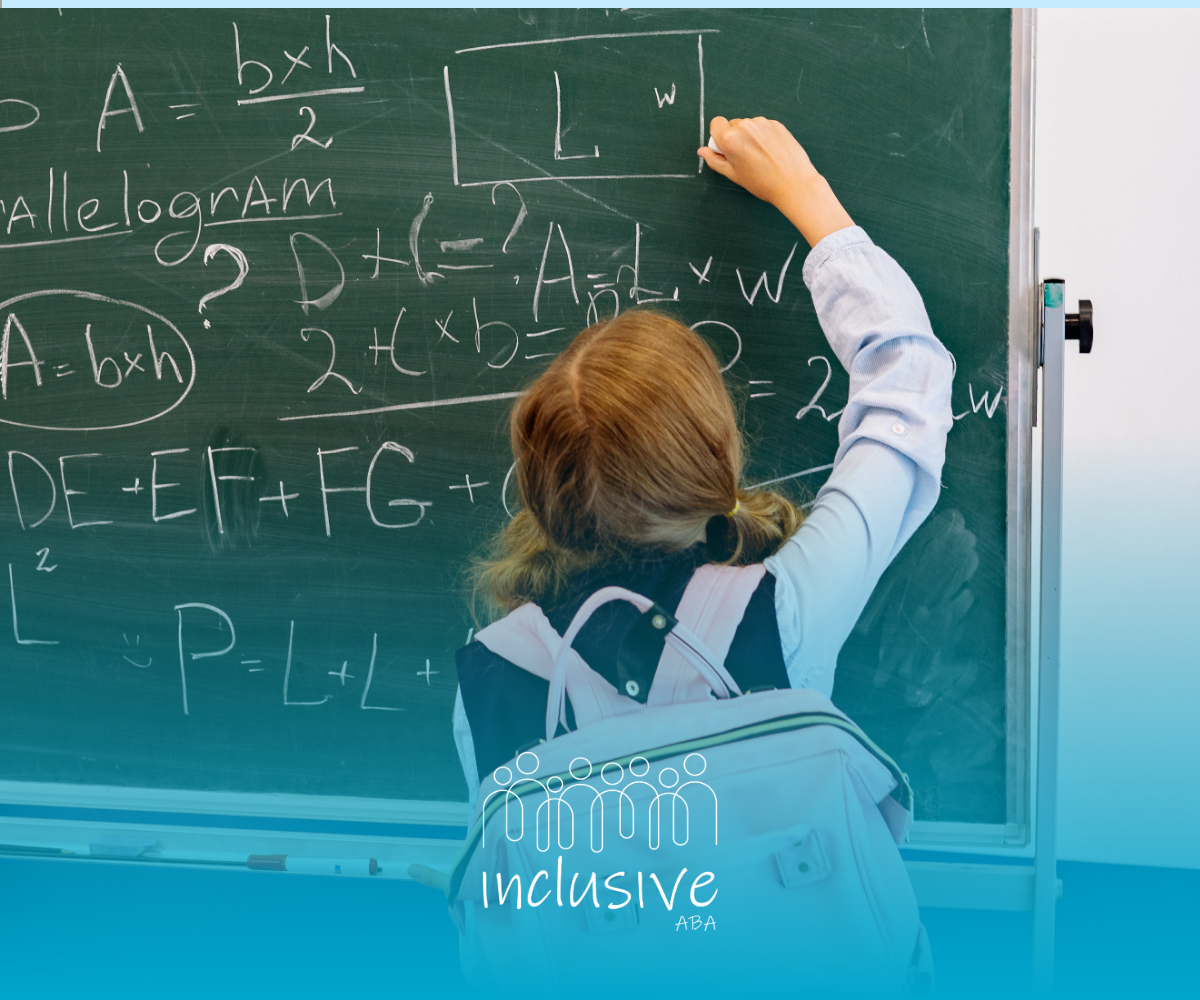
One of the most consistent, most painful, and most misunderstood patterns in autism families goes like this: the parent picks their autistic child up at 3 pm. The teacher smiles and says some version of "she was great today, no issues at all." The child gets in the car, silent. Ten minutes after arriving home, the meltdown starts. Or the shutdown. Or the crying that lasts an hour. Or the total refusal to talk, eat, or engage.
The parent tries to explain this to the teacher. The teacher looks confused. "But she seems fine here."
The gap between the school report and the home reality can leave families feeling gaslit, alone, or convinced they must be causing the problem somehow. They aren't. What they are seeing is one of the most consistently documented phenomena in the autism research literature: masking (also called camouflaging), the conscious or unconscious suppression of autistic traits in social settings where being visibly autistic feels unsafe. Autistic children mask at school because school is not safe. Home is safer, so home is where the mask finally comes off.
This article covers what the research actually shows about autistic masking, why school is such a strong trigger, why home is the release valve, what the pattern looks like in practice (including "after-school restraint collapse"), what the long-term costs of chronic masking are, and what parents can do about it.
What Autistic Masking Actually Is
Masking, also called camouflaging or social compensation, refers to the strategies autistic people use to hide autistic traits and appear more neurotypical in social settings. It was first systematically studied in adults by Hull and colleagues in 2017, whose qualitative research identified three broad components:
- Compensation: actively developing strategies to work around social communication difficulties (rehearsing conversations, memorizing scripts, copying peers' behavior)
- Masking: hiding autistic traits others might notice (suppressing stimming, forcing eye contact, holding in emotional responses)
- Assimilation: trying to fit into social situations that feel uncomfortable (pushing through sensory overload, staying in overwhelming environments, faking interest)
Subsequent research, including the Camouflaging Autistic Traits Questionnaire (CAT-Q) developed by Hull, Mandy, and colleagues in 2019, confirmed that camouflaging is common, measurable, and consistently associated with mental health costs.
While the earliest research focused on adults, subsequent work has documented that autistic children — including elementary-age children — also mask, and that masking often begins earlier than families realize. A 2021 systematic review by Cook, Hull, Crane, and Mandy found that camouflaging is prevalent across the autistic population and starts in childhood for many.
Why School Is a Masking Trigger
School creates a nearly perfect set of conditions for autistic masking. Understanding why makes it easier to see what your child is actually dealing with every day.
Peer social pressure. School is a dense social environment with dozens or hundreds of peers making constant real-time judgments. For an autistic child who has been bullied, teased, or excluded even once, masking becomes a protective strategy. Perry, Mandy, Hull, and Cage's 2022 research framed autistic masking as a response to autism-related stigma, using social identity theory to show that camouflaging increases when autistic people anticipate negative treatment from others.
Fear of being seen as different. Even without overt bullying, autistic children often become aware early that they process the world differently from their peers. The specific fear of standing out, being singled out, or being seen as "weird" can drive intense masking, particularly in girls and gender-diverse children, in whom camouflaging tends to be more pronounced.
Explicit and implicit consequences. Some school environments explicitly punish autistic behaviors: reprimands for stimming, being sent out of class for not sitting still, being asked why the child "can't just" behave a certain way. Even when consequences are not explicit, most autistic children pick up quickly that being visibly autistic invites correction, attention, or exclusion.
Sensory environment demands. School environments are often sensory-heavy in ways that require sustained regulation: fluorescent lighting, hallway noise, cafeteria acoustics, unpredictable schedule changes, peer contact, and academic demands stacked on top of each other. Holding it together through six hours of this requires enormous nervous system effort.
Teacher expectations. Even the most well-meaning teachers often reward "compliance" over authenticity. A quiet, still, focused autistic child is often described as "so well-behaved," which teaches the child that suppressing their actual state produces approval. This is a reinforcement pattern, whether or not anyone intends it.
Academic performance stakes. For autistic children who are academically successful, the pressure to keep performing (and to keep looking like they are performing effortlessly) becomes another layer of masking. Struggling internally while producing perfect work is exhausting.
Why Home Is Where the Mask Comes Off
If school is where masking builds up, home is where it releases. This is not a failure of home. It is exactly what home is supposed to be for.
Home is where attachment lives. Children of any neurotype tend to hold it together with lower-attachment adults (teachers, coaches, strangers) and let their full emotional experience out with the adults they trust most. This is a healthy attachment pattern, not a broken one. The parents who are dealing with the meltdowns are the parents the child feels safest with.
Home doesn't have the same social stakes. The specific social pressures of school (peer judgment, teacher approval, keeping up appearances) do not apply the same way at home. The nervous system finally gets to relax the constant monitoring.
The nervous system has to release somewhere. The physiological work of masking is real. Suppressing stims, forcing eye contact, holding in emotional responses, maintaining executive function through a full school day is genuinely exhausting. When the mask finally comes off, the pent-up dysregulation has to go somewhere. If it hasn't been released at school (and it usually hasn't), it releases at home.
Home is where the child can be their whole self. In an ideal case, home is where the child gets to stim freely, wear comfortable clothes, follow their own routines, engage with special interests, and communicate in whatever way is easiest. The contrast between school (masked, restrained) and home (free, dysregulated) is the visible sign that the child has been holding a great deal in all day.
What After-School Restraint Collapse Looks Like
The specific pattern in which autistic (and many neurodivergent) children hold it together at school and fall apart the moment they get home is often called after-school restraint collapse, a term popularized by therapist Andrea Nair. The pattern is not a formal diagnosis, but it is widely recognized by clinicians and autism families.
Common features:
- Meltdowns within minutes of getting home (or in the car on the way home)
- Complete shutdown — becoming silent, unresponsive, retreating to a room
- Crying that seems disproportionate to any immediate trigger
- Increased sensory sensitivity in the afternoon and evening
- Physical symptoms: headaches, stomachaches, extreme fatigue
- Regression in skills that were solid at school (toileting, eating, self-care)
- Rage or aggression toward safe caregivers
- Perfectionism spiraling into total refusal to try
- Sleep disruption in the hours after school
What makes it distinctive: the pattern is time-linked (after school specifically), consistent across days, and rarely happens on weekends or breaks. The trigger isn't anything specific at home. The trigger is the accumulated cost of holding it together at school all day.
What the child is often experiencing internally: total exhaustion, sensory saturation, social exhaustion, feeling misunderstood, feeling like they can't do it again tomorrow, shame about not being able to explain what's wrong.
The Costs of Chronic Masking
Masking is not a neutral coping strategy. Research over the past decade has consistently documented that chronic camouflaging carries meaningful mental health costs.
Autistic burnout. A 2020 study by Raymaker and colleagues formally defined autistic burnout as chronic exhaustion, skill loss, and reduced tolerance for stimuli, and identified chronic masking as one of the most common drivers. Autistic burnout in children can look like severe school refusal, loss of previously mastered skills, and profound withdrawal.
Depression and anxiety. Multiple studies, including Cage and Troxell-Whitman's 2019 research, have documented significant associations between camouflaging and depression, anxiety, and general psychological distress in autistic people.
Suicidality. A 2018 study by Cassidy and colleagues found camouflaging to be a significant risk marker for suicidality in autistic adults. This finding has been replicated in subsequent research and is a critical reason why chronic masking is not something to encourage.
Identity confusion. Long-term masking, particularly when it begins in childhood, can leave people feeling disconnected from who they actually are. Autistic adults who masked heavily as children often describe not knowing what they genuinely like, want, or feel, because they spent so much of their development performing a version of themselves.
Delayed diagnosis. Autistic children who mask effectively — especially girls, gender-diverse children, and Black autistic children, who face compounding stigma — are often diagnosed much later than their male, white peers. The masking that keeps them safe at school also keeps their needs invisible to the adults who could have supported them earlier.
None of this means masking is the child's fault. It means the pressure to mask is the problem, not the child's response to it.
Why Parents Get the "Worst" of It
Parents who see the after-school meltdowns often carry a specific kind of guilt: is something wrong with our home? Are we causing this? Why can she do it there and not here?
The answer is the opposite of what it looks like. Getting the "worst" of a child's day is a sign that you are the safest person in the child's world. The child is holding it together for a room full of strangers who make it clear (through peer judgment, teacher expectations, or the sheer weight of the environment) that being visibly autistic is not safe. Then they come home to you, the person they trust most, and their nervous system finally lets go.
This is not a failure of parenting. It is a demonstration of attachment.
The frustration and grief that come with this pattern are real. Being on the receiving end of daily meltdowns is exhausting, particularly when the outside world does not see what you are seeing. That distress is legitimate. But the pattern itself is a sign that your child feels safe with you in ways they don't feel safe elsewhere.
What Parents Can Do
The goal is not to eliminate masking (which is often necessary for safety in specific environments), but to reduce the pressure to mask, reduce the cost when it does happen, and make sure the child has a life in which they can regularly be their whole self.
Recognize what's happening. The single most important intervention is understanding the pattern. Once you see after-school meltdowns as the release of accumulated masking pressure, rather than as bad behavior at home, everything downstream changes. The response to a nervous system release is different from the response to willful defiance.
Build a decompression protocol. The 30 to 60 minutes after school are usually the highest-risk window. Reduce demands to the absolute minimum during this time:
- No immediate homework questions
- No "how was your day?" (this is a demand, even though it feels caring)
- Preferred snack ready and available
- Preferred sensory activity (screens, special interest, quiet space) available
- Comfortable clothing available
- Minimal transitions
- Quiet in the car on the way home if that helps
Some children need 30 minutes. Others need two hours. Match your child's actual needs, not what feels reasonable.
Reduce masking pressure at home. Home should be where the mask can be off. This means allowing stimming, allowing preferred foods, allowing preferred clothing, allowing solo time, allowing communication in whatever mode is easiest (including no communication for a while). Every accommodation at home reduces the total masking burden.
Advocate at school. The school environment is often adjustable. Accommodations that reduce the need to mask include:
- Access to a quieter alternative space (see our guide to cafeteria accommodations for one example)
- Permission to stim, use fidgets, or wear noise-reducing headphones
- Movement breaks during the school day
- Reduced participation demands in group settings
- Advance notice of schedule changes
- A trusted adult the child can go to when overwhelmed
- Formal accommodations documented in a 504 plan or IEP
Validate the child's real experience. Autistic children often internalize the message that the "school" version of themselves is the "real" or "acceptable" version, and the "home" version is the failure. This is backwards. Being your whole self is not failure. Explicitly telling your child, over and over, that home is a safe place to be their whole self reduces the shame that compounds the masking cost.
Consider whether your child needs less demand overall. For some autistic children, the school day itself is unsustainable at full length, and shortened school days, homeschooling, or specialized settings may be the right answer. This is not a failure. It is a recognition that some environments cost more than any child can sustainably pay.
Have honest conversations with teachers. The school-home disconnect can be addressed. A useful framing:
"I know you're seeing a well-regulated child at school, and I'm not questioning that. What I'm seeing at home is the release of everything she's been holding in all day. This is a documented pattern in autistic children called masking, and it means she's working very hard at school. Here are some accommodations I think would reduce that pressure."
Teachers who don't have autism training may not know about masking, and framing the conversation around observable patterns (rather than criticizing what the teacher is seeing) often lands better.
When to Seek Professional Support
After-school decompression is normal for many autistic children. Extreme or persistent patterns are worth professional attention. Consider reaching out for support if:
- Meltdowns or shutdowns after school are lasting longer than an hour and happening most days
- Your child is showing signs of school refusal (physical symptoms in the morning, escalating resistance to going, panic about school)
- Your child is losing skills they previously had (regression in speech, self-care, eating, sleeping)
- Your child is expressing hopelessness, self-harm thoughts, or suicidal ideation
- The family is at the end of its capacity to support the daily pattern
- Your child's mental health is deteriorating in ways that don't respond to the strategies above
A BCBA, developmental pediatrician, child psychologist, or autism-experienced therapist can help assess whether more structured support is needed. Autistic burnout in children is a real clinical concern and worth taking seriously.
How Inclusive ABA Can Help
Neurodiversity-affirming ABA does not push autistic children to mask more effectively. It does the opposite: it works to reduce the pressure to mask, build self-advocacy skills, support authentic communication, and coordinate with schools on accommodations that reduce the daily cost of holding it together.
Where the Inclusive ABA team can help:
- Assessing whether after-school restraint collapse patterns rise to the level of clinical concern
- Building self-advocacy skills so children can request the accommodations they need
- Supporting communication (verbal, AAC, gestural) so children can express distress before it becomes a meltdown
- Family coaching on decompression protocols and reducing home-side masking pressure
- Coordinating with schools on accommodations that reduce the need to mask
- Supporting parents through the emotional experience of seeing the pattern daily
Inclusive ABA supports families across Colorado, Nevada, Nebraska, and Ohio with in-home ABA therapy tailored to each child's neurodivergent needs. If you're recognizing the pattern in this article, get in touch with our team to talk through what a coordinated approach might look like for your family.
Frequently Asked Questions
1. What is autistic masking?
Autistic masking, also called camouflaging, is the conscious or unconscious suppression of autistic traits in social settings where being visibly autistic feels unsafe. It includes suppressing stimming, forcing eye contact, memorizing scripts, copying peers' behavior, and pushing through sensory overload to appear more neurotypical. Research shows masking is common, measurable, and starts in childhood for many autistic people. It is often more pronounced in autistic girls and gender-diverse children.
2. Why does my autistic child "hold it together" at school but fall apart at home?
Because school is not safe enough to let the mask down, and home is. Autistic children mask heavily at school in response to peer pressure, teacher expectations, sensory demands, and the accumulated cost of appearing "typical" all day. When they get home to the person they trust most, the mask finally comes off and the pent-up dysregulation releases. This pattern (often called after-school restraint collapse) is a sign of attachment, not a sign of bad parenting or a failure at home.
3. What is after-school restraint collapse?
After-school restraint collapse is the widely observed pattern in which autistic (and many neurodivergent) children hold it together at school all day and then fall apart within minutes of getting home. The term was popularized by therapist Andrea Nair. Common features include meltdowns or shutdowns shortly after getting home, physical symptoms like headaches and stomachaches, increased sensory sensitivity, and regression in skills. It is time-linked to school (rarely occurring on weekends or breaks) and reflects the accumulated cost of masking through the school day.
Sources
- Hull, L., Petrides, K. V., Allison, C., Smith, P., Baron-Cohen, S., Lai, M. C., & Mandy, W. (2017). "Putting on My Best Normal": Social Camouflaging in Adults with Autism Spectrum Conditions. Journal of Autism and Developmental Disorders. https://link.springer.com/article/10.1007/s10803-017-3166-5
- Hull, L., Mandy, W., Lai, M. C., Baron-Cohen, S., Allison, C., Smith, P., & Petrides, K. V. (2019). Development and Validation of the Camouflaging Autistic Traits Questionnaire (CAT-Q). Journal of Autism and Developmental Disorders. https://link.springer.com/article/10.1007/s10803-018-3792-6
- Cage, E., & Troxell-Whitman, Z. (2019). Understanding the Reasons, Contexts and Costs of Camouflaging for Autistic Adults. Journal of Autism and Developmental Disorders.
- Cassidy, S., Bradley, L., Shaw, R., & Baron-Cohen, S. (2018). Risk markers for suicidality in autistic adults. Molecular Autism. https://molecularautism.biomedcentral.com/articles/10.1186/s13229-018-0226-4
- Cook, J., Hull, L., Crane, L., & Mandy, W. (2021). Camouflaging in autism: A systematic review. Clinical Psychology Review. https://www.sciencedirect.com/science/article/pii/S0272735821001045
- Perry, E., Mandy, W., Hull, L., & Cage, E. (2022). Understanding Camouflaging as a Response to Autism-Related Stigma: A Social Identity Theory Approach. Journal of Autism and Developmental Disorders. https://link.springer.com/article/10.1007/s10803-021-05411-z
- Raymaker, D. M., et al. (2020). "Having All of Your Internal Resources Exhausted Beyond Measure and Being Left with No Clean-Up Crew": Defining Autistic Burnout. Autism in Adulthood. https://pubmed.ncbi.nlm.nih.gov/32851204/
- Livingston, L. A., Shah, P., & Happé, F. (2019). Compensatory strategies below the behavioural surface in autism. The Lancet Psychiatry.
- Halsall, J., Clarke, C., & Crane, L. (2021). "Camouflaging" by adolescent autistic girls who attend both mainstream and specialist resource classes. Autism.
Looking for Expert Help? We're Here for You!
Our compassionate and skilled team is devoted to enhancing your child's development through customized ABA therapy. Let us partner with you to create a supportive environment for your child's success.
Discover how we can help your family thrive with expert ABA therapy.
Related Posts