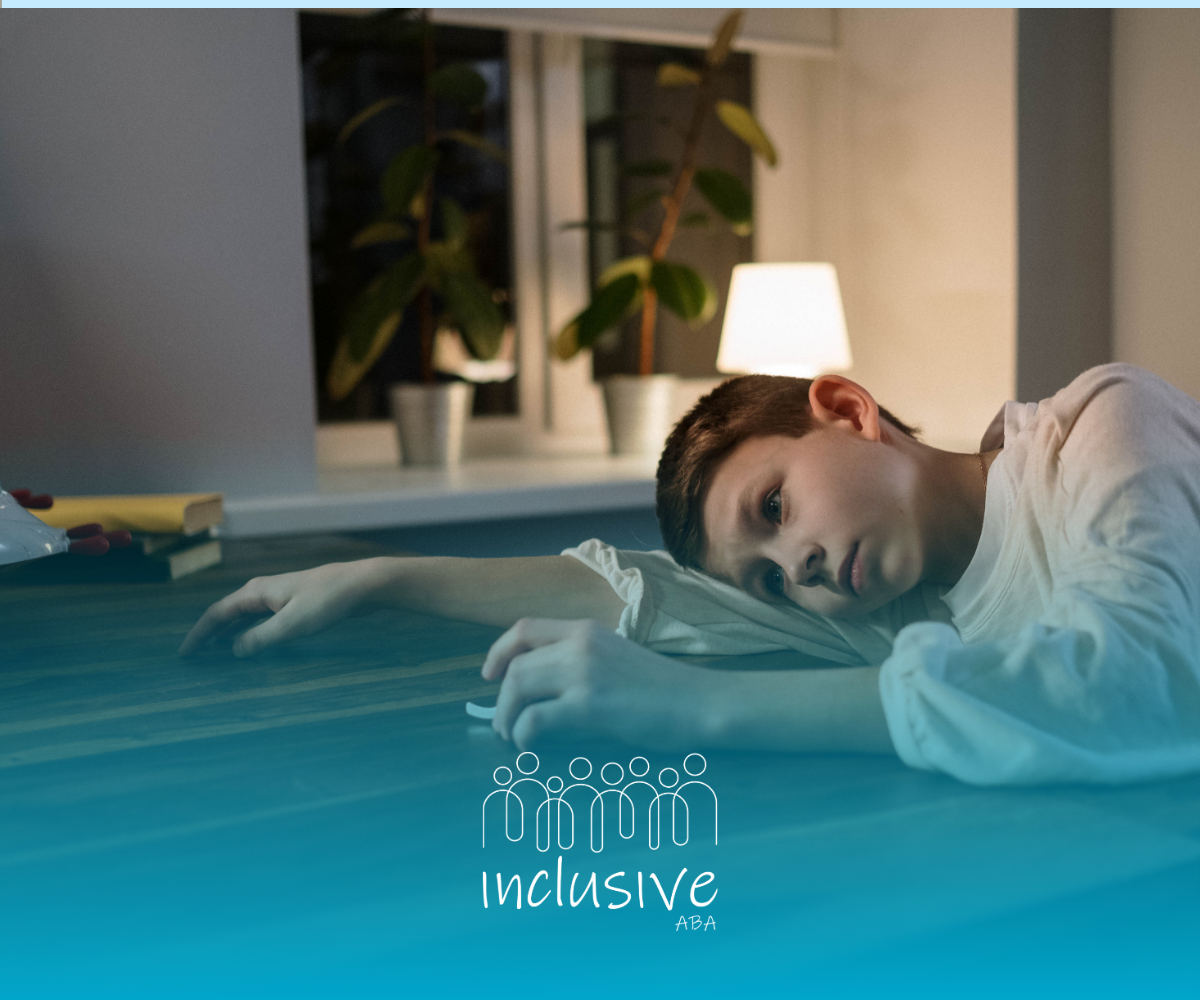
From Gen Ed to Specialized: Comparing Schools for Autistic Children
Choosing a school for a child with autism means matching a specific child's needs to a specific setting, not picking the "best" school in town. The right choice depends on communication level, sensory needs, academic ability, and the support your child needs to access the classroom.
In short: start with your child's evaluation, learn the placement options federal law requires districts to offer, and use a structured comparison rather than a gut reaction. That's the quick answer. Below, we walk through each option, the paperwork behind it, and the questions that separate a good fit from a bad one. Families often pair whichever setting they choose with ongoing ABA therapy services to keep skill-building consistent across school and home.
What "Choosing the Right School" Actually Means
Federal law doesn't hand parents a single "best" placement. Instead, the Individuals with Disabilities Education Act (IDEA) requires public school districts to offer a continuum of options, from a general education classroom with support to a specialized separate school. The Department of Education's own regulations spell this out directly: districts must maintain a full range of settings, spanning regular classrooms, special classes, special schools, home instruction, and instruction in hospitals or institutions.
That continuum exists because autism itself is a spectrum. Autism now affects roughly 1 in 31 eight-year-olds in the U.S., according to the CDC's most recent surveillance data, and no two of those children need the same classroom. Choosing a school for a child with autism starts with figuring out where on that continuum your child currently sits, and staying open to the fact that the answer can change year to year.
Public School vs. Private School for Autism: Weighing the Real Differences
This is usually the first fork in the road. Neither option is automatically right.
Public school strengths:
- Free, and legally required to provide an IEP or 504 plan
- Larger peer group for social modeling and inclusion
- Access to related services (speech, OT, school psychologist) at no direct cost
- Neighborhood proximity and transportation
Private or specialized school strengths:
- Smaller class sizes and lower staff-to-student ratios
- Curriculum and staff trained specifically for autism or learning differences
- Fewer sensory triggers in some purpose-built environments
- More flexibility in daily schedule and behavior support plans
Public schools carry real legal weight behind them. We've broken down whether autistic kids should attend public school and looked more broadly at whether a child with autism can succeed in a regular classroom in earlier posts, since "can they" and "should they" are two different questions. Cost is the other major factor: private placements funded by the district only happen when the public system genuinely cannot meet the IEP, and that determination is made by the IEP team, not the family alone.
IEP vs. 504 Plan for Autism: Why the Paperwork Matters
Before touring a single building, know which legal document applies. This is one of the most common points of confusion for parents.
An IEP, governed by IDEA, provides specialized instruction, measurable annual goals, and direct services like speech or occupational therapy. A 504 plan, governed by a separate civil rights law, provides accommodations within the general curriculum but does not change what or how a child is taught. As the University of Washington's disability resource center frames it, an IEP is designed for students who need specialized instruction and related services, while a 504 plan is designed for students who mainly need accommodations to access the learning environment on equal footing with their peers.
Most autistic children who need direct skill-building in communication, behavior, or academics will qualify for and benefit more from an IEP. A 504 plan can still be appropriate for a child whose primary need is environmental (extra time, seating, sensory breaks) rather than instructional. Our parent training program includes guidance on preparing for IEP meetings, since walking in with documentation and clear goals changes the outcome of that meeting.
The Full Range of Placement Options
Beyond the public-versus-private question, the continuum includes several specific settings worth knowing by name:
- General education classroom with push-in support — a paraprofessional or specialist works inside the regular classroom
- Resource room or pull-out services — the child leaves the classroom for specific instruction, then returns
- Self-contained autism classroom — a smaller, dedicated classroom within a public school
- Specialized day school — a separate school built specifically for students with disabilities
- Home-based instruction — education delivered at home, often paired with clinical support
Families who choose or supplement with home instruction often combine it with home-based ABA support to keep skill-building consistent outside the classroom. Others keep their child in a public school setting while adding school-based ABA therapy to bridge clinical goals and classroom expectations. Placement decisions must be based on the child's needs as documented in the IEP, not on convenience or what's already available at the nearest school. The federal regulation is explicit that districts must plan for supplementary support to happen alongside regular classroom placement, meaning a child doesn't have to leave general education entirely just to get help.
Questions to Ask When Touring a School for Autism
A school tour tells you more than a brochure ever will. Bring this list:
- How many students does each special education teacher and aide support directly?
- What's the plan for sensory regulation — is there a quiet space, and who supervises it?
- How does the school handle a meltdown or shutdown in real time?
- Can you observe an actual autism classroom, not just a model room?
- How often is the IEP team available for check-ins outside the annual review?
- What's the transition plan if my child moves between settings mid-year?
Write down answers. Compare them across every school you visit, side by side, rather than relying on impressions after the fact.
One Family's Decision: A Real-World Example
Consider a family we've worked with in Colorado. Their son was nonverbal, thriving with one-on-one attention, but overwhelmed in groups larger than four or five children. Their neighborhood public school offered a strong general education program but a self-contained classroom with twelve students. A private school twenty minutes away offered a six-student autism classroom with two aides.
The family didn't choose based on reputation. They toured both, sat in on a full morning at each, and matched what they saw to their son's actual triggers. They chose the smaller private classroom for that year, while keeping ABA therapy in Colorado running alongside it to reinforce communication goals at home. Two years later, with more group tolerance built through therapy, they revisited the IEP and moved him into the public school's inclusion program. Placement isn't permanent. It's a decision you're allowed to revisit as your child grows.
Our team at Inclusive ABA supports families through exactly this kind of transition, coordinating with school teams so therapy goals and classroom goals point the same direction.
Red Flags: Signs a School Isn't the Right Fit
Watch for these patterns after enrollment:
- Increasing school refusal or morning meltdowns that weren't there before
- Staff who can't describe your child's IEP goals when asked directly
- No documented behavior plan despite frequent incident reports
- Communication supports (AAC devices, visual schedules) sitting unused
If school refusal shows up, it's worth reading through what's typically behind it before assuming the placement itself is the sole cause. We've covered common triggers behind school avoidance in autistic children in more depth, since sensory overload and anxiety don't always mean the setting is wrong — sometimes it means the supports inside that setting need adjusting first.
School placement isn't a one-time decision you get right or wrong forever. It's the first of many adjustments you'll make as your child grows and their needs shift. Bring your questions about IEPs, placement options, or coordinating ABA with a specific school to our team, and we'll help you map out what actually fits your child right now.
Frequently Asked Questions
How do I choose a school for a child with autism?
Start with your child's most recent evaluation, compare placements along the IDEA continuum from general education to specialized settings, and tour finalists in person before deciding.
What's the difference between an IEP and a 504 plan for autism?
An IEP provides specialized instruction and direct services; a 504 plan provides accommodations within the existing curriculum without changing what's taught.
Is public school or private school better for autism?
Neither is universally better — public schools offer free, legally mandated services and larger peer groups, while private or specialized schools often offer smaller classes and more targeted staff training.
What questions should I ask when touring a school for autism?
Ask about staff-to-student ratios, sensory accommodations, meltdown response procedures, and how often the IEP team is available outside the annual review.
Can a child with autism switch schools or placements mid-year?
Yes. Placement can be revisited any time the IEP team determines the current setting no longer matches the child's needs, not only at the annual review.
Looking for Expert Help? We're Here for You!
Our compassionate and skilled team is devoted to enhancing your child's development through customized ABA therapy. Let us partner with you to create a supportive environment for your child's success.
Discover how we can help your family thrive with expert ABA therapy.
Related Posts